Dick Johnson famously says that all you get from looking back is a sore neck. It is a philosophy that has served him well.
Eyes forward, foot down, worry about the next corner rather than the last one.
But while the legend himself has never been one to dwell on the past, the team that bears his name carries a history, heritage and pedigree that stands alone in the Supercars pit lane.
Looking Back is a new regular feature by Will Dale, telling the stories, the successes, the trials and the tribulations of a racing life now in its seventh decade and a team deep into its fifth.
Dick might never look back. Lucky for all of us, Will does.
Enjoy edition No.1.
COLOURS are at the core of so much of Dick Johnson Racing’s lore.
You don’t think of the original Tru-Blu Falcon without thinking of its bold colour. Nor the Kermit hues of the menacing Greens’-Tuf XE.
And yellow? Well, that may be one of our most successful colours of all.
There’s no brand name tie-in to make it roll off the tongue like its predecessors, but it was just as successful on the racetrack – in particular amid a genuine golden era in the mid-1990s.
But let’s take a quick step back, because there have been a lot of yellow cars raced by both DJR and Dick himself over the years.
In fact, DJ’s very first Australian Touring Car Championship round start in 1970 came aboard his LC GTR Torana, which carried the bold yellow with red stripes of Shell.
He continued on in yellow machines for a little while – the Eagers and Zupps-owned cars Johnson raced in the early ‘70s also wore that colour – before his switch to Bryan Byrt-backed Fords put him into a series of blue Falcons.
Dick’s first yellow Falcon actually came across the ditch: he shared the Anderson Brothers’ V8-engined XE at the inaugural Wellington Street Race in New Zealand in 1985.
It would take almost a decade for one of his own Falcons to carry those colours, though. Although it never actually got to go racing.
That car was DJR EB1, the first Falcon that the team built during 1992 ahead of the introduction of the five-litre V8 rules package for 1993.
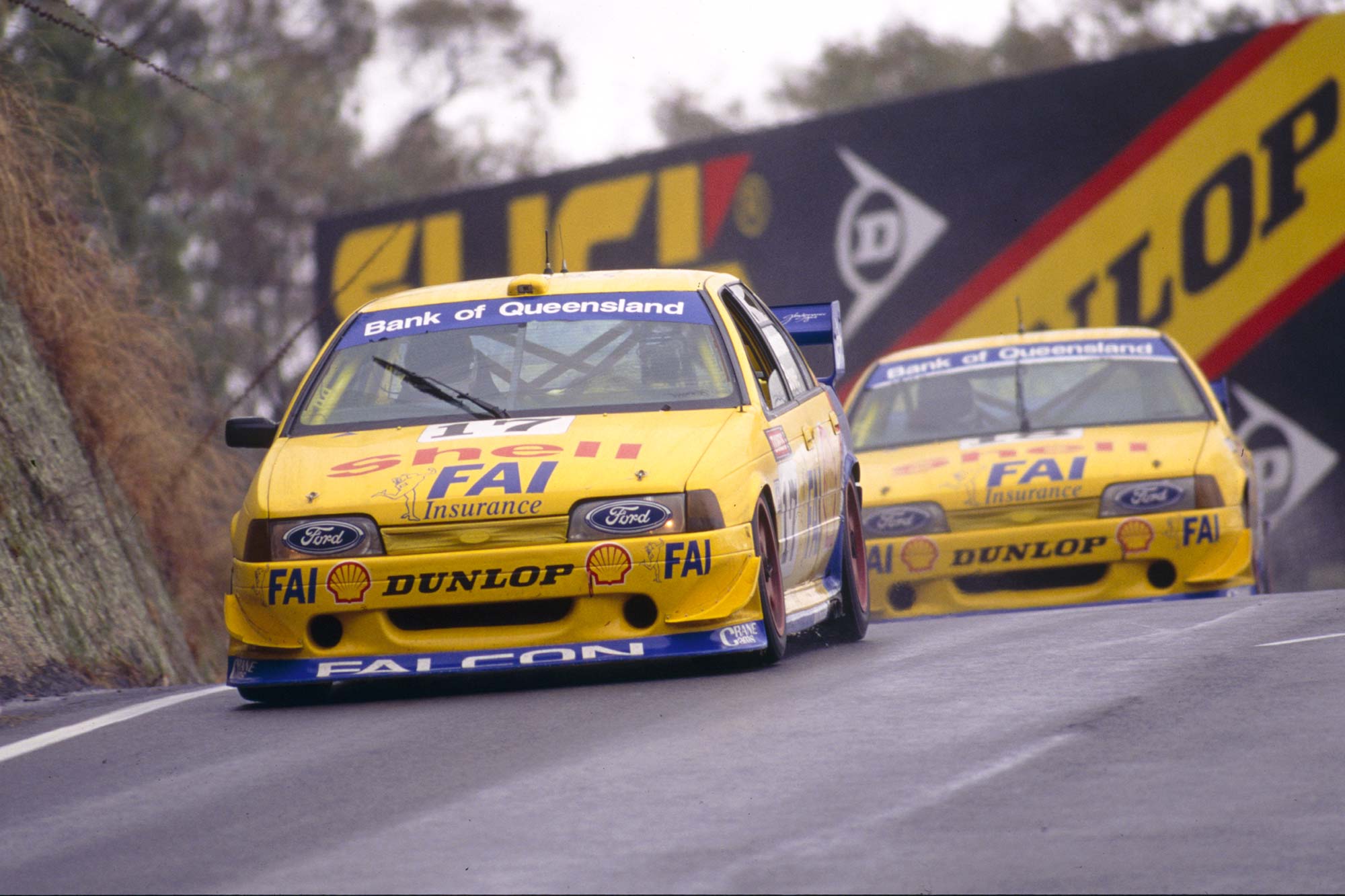
The covers came off that during the Oran Park championship finale that year, revealing a bold yellow and blue look that was the team’s signature for the next four seasons.
But they wouldn’t be carried in anger by EB1 – the car was too radically different to the final rules – so its only track action consisted of testing at Lakeside and a run at that year’s Bathurst 1000 media day.
That left the mantle of DJR’s first yellow race car to its successor – DJR EB2 – which Dick debuted at the Adelaide Grand Prix’s touring car support races later that year.
The combination of Shell yellow and Ford blue remained almost unaltered for the next four seasons, which represent one of the most successful in the team’s history.
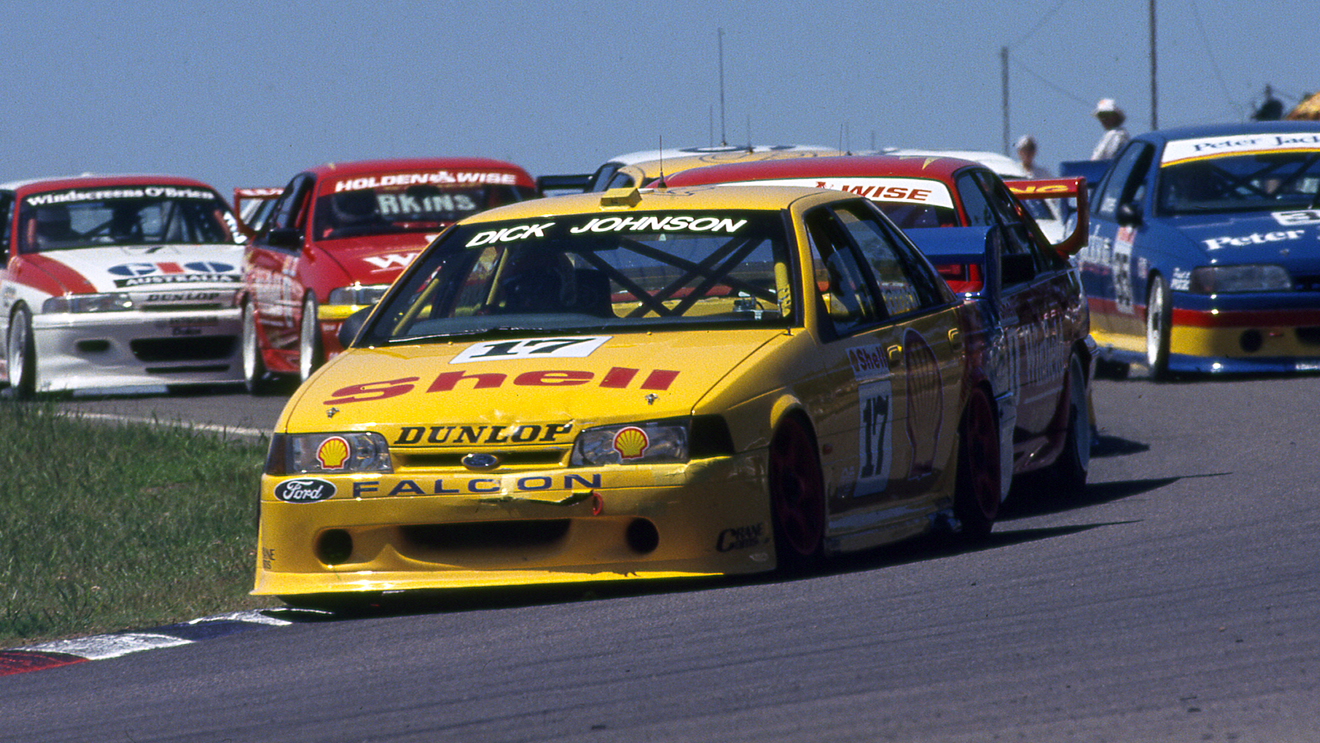
Johnson and teammate John Bowe won the first two V8 races of the ATCC’s new era in 1993 at Amaroo Park, but it wasn’t until the following year that DJR hit its straps.
With the legendary Ross and Jimmy Stone at the helm of the technical side of the team, the yellow DJR Falcons emerged as the cars to beat just in time for the 1994 endurance races.
Dick and JB charged from 15th on the grid to win the Sandown 500, then fought off a surprise attack from rookie Craig Lowndes to claim the Bathurst 1000, and rounded off the year with Bowe sweeping the two Adelaide Grand Prix supports.
The steamroller continued into 1995, Bowe claiming seven wins from 20 starts to claim his first and only ATCC title.
He and the boss backed up their Sandown success from 12 months prior on what proved a particularly special Fathers Day for the Johnson clan. While Dick and JB won in Car 17, following them home in third place were Charlie O’Brien and Stevie J in Car 18.
Dick and JB’s hopes of a similar repeat at Mount Panorama ended following a clash with Glenn Seton, while Bowe rounded out the year with another sweep of the Adelaide support races.
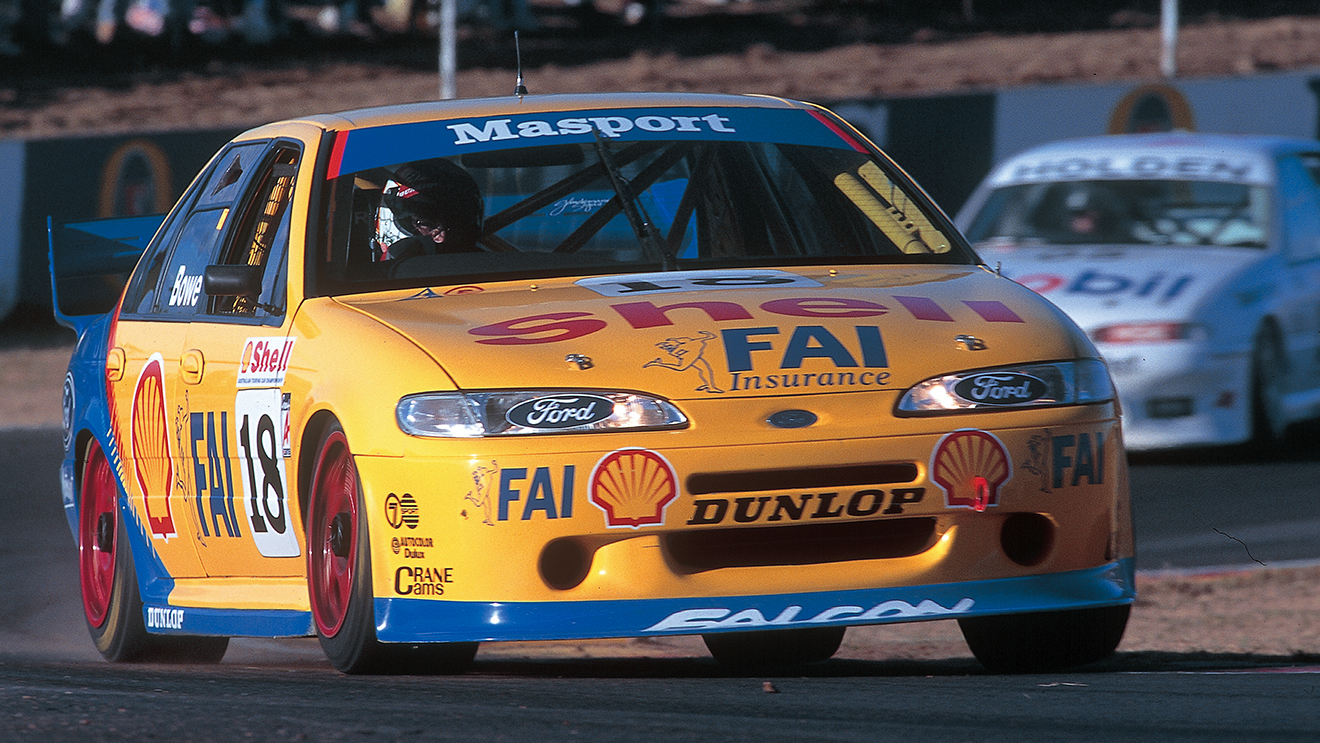
Carrying the reigning champion’s No. 1, Bowe started the 1996 ATCC with a narrow race victory at Eastern Creek over a now full-time Lowndes, making his championship debut with the Holden Racing Team.
The pair fought a hard battle across the season – one which included both crashing on the opening lap at Phillip Island – but Bowe’s five race wins weren’t enough to deliver back-to-back titles.
DJR’s main yellow era came to a close at the end of that year, but it did so on a winning note.
Bowe won the first two legs of the final Wellington Street Race to claim overall round honours.
Yellow remained a key part of DJR’s livery in the years that followed, but red was the dominant colour from 1997 through to the end of 2002 on a succession of EL and AU-series Falcons.
The arrival of the BA Falcon saw yellow make a brief comeback, with a Shell Pecten-themed yellow and white livery used across 2003 and 2004.
Tribute liveries were responsible for bringing yellow back in the following decade.
The team adopted the ’94 livery to mark 20 years since DJ’s final Bathurst win for the 2014 edition of the ‘Great Race’, while the Pecten livery adorned Car 17 at the 2016 Sandown 500, the first time the Melbourne enduro featured a ‘Retro Round’ theme.
It took another seven years for yellow to return, this time on the team’s wildcard entry in the 2023 Bathurst 1000, the first time the race was run to Gen3 rules.
Swiss-Italian racer Simona De Silvestro paired with then-rising star Kai Allen in Car 98, which carried a reversed livery to the team’s regular Shell V-Power Mustangs.
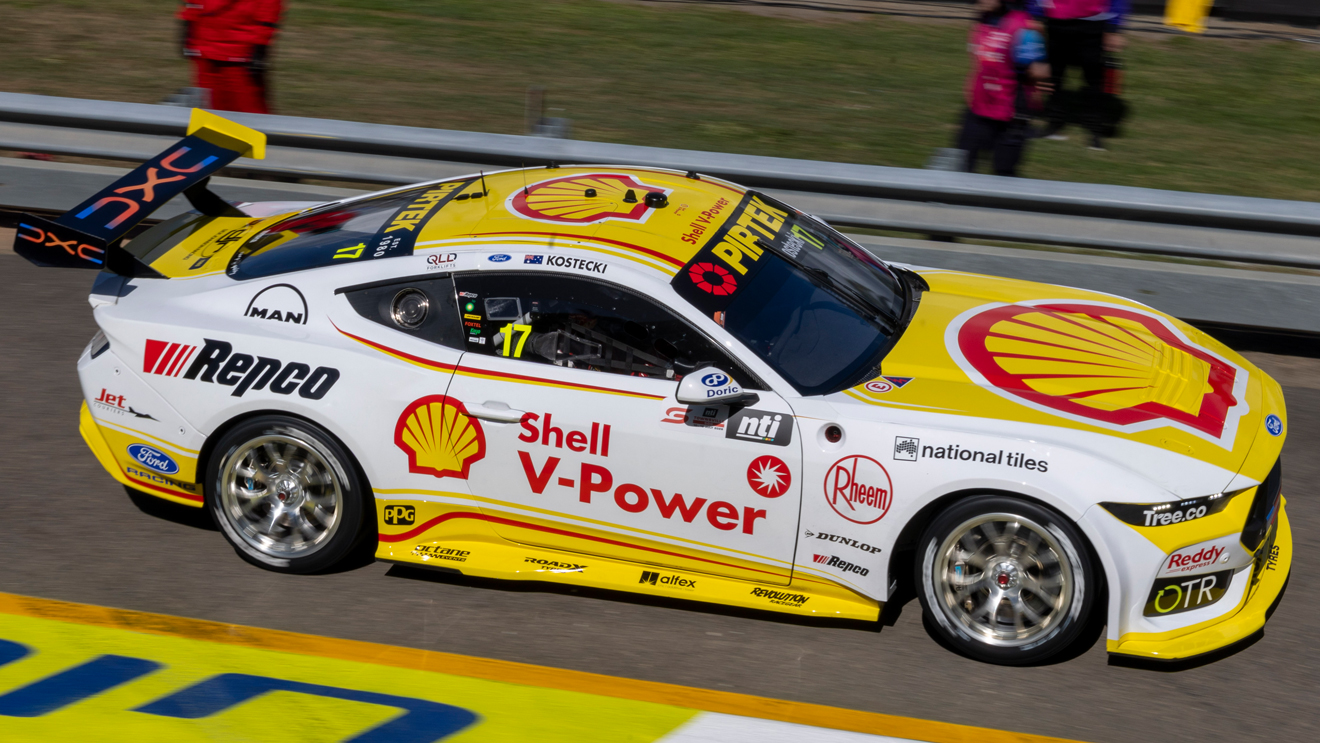
In 2026, yellow makes another comeback: this time in honour of the film Minions & Monsters.
Brodie Kostecki and Rylan Gray’s cars have switched to a primarily yellow look for the Townsville 500 as a nod to the biggest little troublemakers around, and exclusive Minions & Monsters Bag Buddy collectibles on sale at Shell Reddy Express and Shell OTR around Australia.
Will it be as successful as the team’s yellow cars from the 1990s? Fingers crossed!
Got a story you’d like to hear? A topic you’d like explored? A race or car you want to know more about? Email will@djr.com.au and it might just become a future feature story on Looking Back.